Exercise Idea for the Holidays


Wine is a celebration to memories and moments,
to its inherent art, science, creativity, and emotions.
Happy Holidays .


Hellenic wine: “Ἐν οἴνῳ ἀλήθεια" (in wine [there is the] truth)…


Monday evening a friend invited me to be a part of a Greek wine and food pairing at a restaurant in the West Side.

 
The invitation served as a great opportunity to expand my horizons in Hellenic wine culture given that my palate only remembered being exposed to a type of wine called Retsina , a wine emanating flavors of pine trees and turpentine. The Retsina flavor originates in ancient Greece where amphoras were sealed using Pine resin to preserve the wine from being oxidized. As technology advanced and barrels, corks, and bottles were implemented, the need for pine resin was no longer needed; however, the flavor became a part of the cultural identity, loved by many, and thus the Retsina wine retained its pine characteristic which is now acquired by fermenting the wine using an Aleppo Pine resin. Monday night however was not a night of pine aromas and flavors; instead, it was a night of enjoyable and interesting wines originating from grape varieties whose names are difficult to  remember but that have left an impression.

First Paring:
 
Warm squid salad with fava beans, frisee, oregano & lemon accompanied by a 2010 Domaine Sigalas, assyrtiko-athiri. The Domaine Sigalas is a wine originating from the volcanic island of Santorini. The assyrtiko-athiri label denotes the wine is made from a blend of 2 indigenous white grapes: Assyrtiko and Athiri, a type of grape used to make Retsina.

Visually the wine displayed a golden color typical of an aging wine or a wine aged in oak barrel.  The color was reminiscing of the color found in a California Chardonnay. Swirling the wine around the glass illustrated a medium plus viscosity, an indication of high alcohol content or some residual sugar in the wine.

On the nose the wine was a combination of smells, primarily the wine was rich in tropical smells: pineapple and minor notes of banana. The primary aromas were followed by a secondary layer of citrus smells and a third layer of mineral aromas. The wine also was warm on the nose, hinting that the viscosity of the wine was a result of high alcohol content.

On the palate the wine was a dry wine displaying low to medium acidity, medium plus body (high alcohol content), moderate flavor intensity, and a medium finish. The Domaine Sigalas followed the nose, primarily tropical flavors of pineapple and pear complemented by a small and delicate citrus and mineral quality. The wine was an enjoyable paring with the warm squid salad although the light spices in the salad were intensified by the alcohol content in the Domaine Sigalas which resulted in a warm mouthfeel.

Bottle Cost: $15 + tax. 

Second Paring:

Spanakopita with spinach & feta paired with a 2009 Skouras, Moschofilero. The moschofilero label denoted the wine was made primarily of the indigenous grape moschofilero which is typically grown in the Peloponnese peninsula.


Visually the wine was not very exciting in color; the glass of wine displayed a pale yellow color with a dull hue. Furthermore the wine was somewhat cloudy as a result of small diameter crystals floating in the wine. The crystals were tartrates, particles that precipitate out of solution in some wines when the wine is stored under below optimal cold temperatures. 

On the nose the wine became more interesting, emanating floral and crisp citrus notes of lemon and green apple. On the palate the wine was a dry wine displaying medium acidity, light medium body (moderate alcohol content), a moderate flavor intensity, and a short finish. The notes of citrus and green apple persisted in the palate although the short finish made the Skouras a thin wine. 

In my opinion the lack of structure in the wine could have been as a result of the cold serving temperature , which negatively affected the quality of the wine thus making it thin. During my research about the Skouras wine I came across positive feedback about it crisp quality which I will have to experiment again. One of the things I enjoy about wine is that like art, it leads you back to re-experience and reinterpret over and over again.

Bottle Cost: $15 + tax. 

Third Paring:

Muhammara with walnuts, throubes olives & ricotta salata paired with a 2007 Skouras, Megas Oenos, from the Peloponnese Peninsula.


The Mega Oenos is a blend of one indigenous grape Agiorghitiko and the worldly Cabernet Sauvignon, 80% to 20% ratio respectively.

 Visually the wine displayed brilliance and deep intense purple color. The wine displayed fruit aromas of blueberries, red cherries, and blackberries intertwined with bouquet of truffle, smoke, and leather. The palate showed a well balanced wine with medium plus acidity, medium plus tannins, and medium plus alcohol. The delicious aromas also persisted in the palate and the wine provided a velvety medium palate reminiscing of a “typical” right-bank Bordeaux wine making this a very inviting wine. The high level of fruitiness offered by the wine was probably offered by the Agiorghitiko grape while the structure and most of its tannins might have come from the Cabernet Sauvignon. All in all, Megas Oenos presented a delicious wine and a great company for food.

Bottle Cost: $27 + tax.  

Fourth Paring:

Lamb kabab with tzatziki, watercress, & flatbread paired with a 2007 Domaine Karydas, Xinomavro, from Macedonia, the largest and second most populous region of Greece. The grape variety used in the wine is Xinomavro.

Visually the wine displayed a light ruby red color and low opacity. On the nose it presented mainly aromas of red cherry accompanied by gently by tomatoes, olives, and an herbaceous quality. The palate demonstrated a wine with medium plus acidity, medium body, and medium tannins. A perfect wine for tomatoes based dishes. The wine had a quality similar to a young Nebiolo, abundant amounts of acidity and velvety tannins followed by a mid palate showcasing dried fruit, spices, herbs, red cherry, and a gentle chalky mouthfeel. 

Bottle Cost: $27 + tax. 

Conclusion: 

The exposure to the new wines changed my limited perspective about Hellenic wine and I look forward to experiencing more of Greece’s terroir through its oino (wine).

Asado & Shiraz (Wolf Blass “Gold Label”, 2008 Shiraz)


Brand Name:  Wolf Blass “Gold Label”
Vineyard: Wolf Blass
Vintage:    2008
ABV%:      15%
Varietal:    Shiraz
Appellation:   Barossa Valley, South Australia, Australia
Price:        $25 + tax 

The week of April 23rd was very busy with work related items: shop drawings, writing material specifications, and preparing documents to request bids for materials needed for a building I have helped design. The weekend finally arrived and a friend of mine  decided Saturday would be a good day to enjoy a few libations, wine, and BBQ; a great way to relax after an active week at the office.

Saturday afternoon arrived and in my mind there were 7 things I needed for what I consider to be a proper BBQ:

1. Good tunes, this time provided by provided by Sam John Hopkins better known as Lightnin’ Hopkins:

 
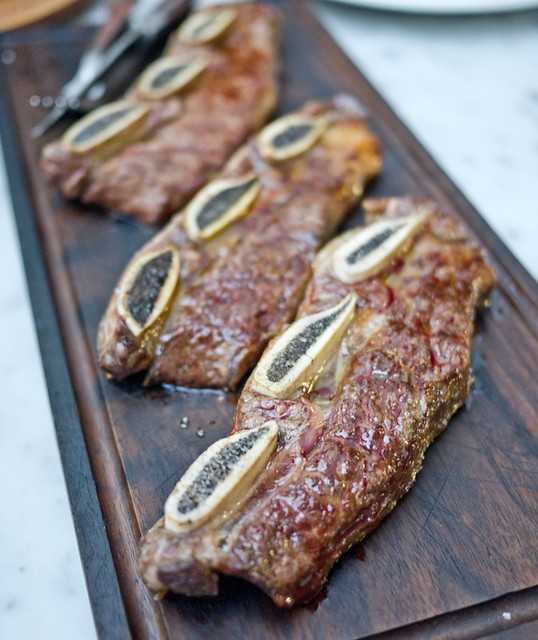
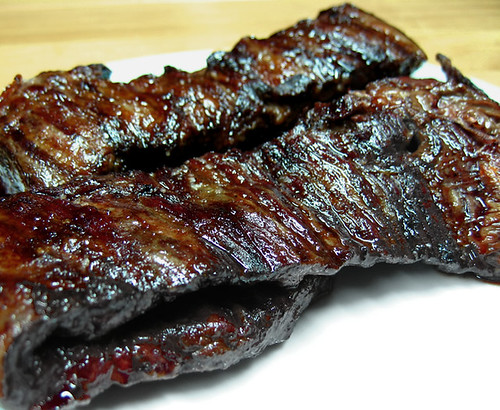
2. Some of my favorite meat cuts and charcuterie: Morcilla, Chorizo, Tira de Asado, and Vacio or Entraña

The meal (Fernet, Meat, & Wine)
3. Some vegetables and/or Olivier salad to accompany the meat.

4. Coarse salt: I have always been a believer that in a BBQ the flavor of the meat should only be complemented by the flavor profile of the any wood used for the fire and the flavor provided by a good rub of coarse salt. I prefer coarse salt as fine salt penetrates deeply into the meat making it less juicy while the coarse salt mostly stays on the surface of the meat, leaving the meat juicier and adding a light crunchy texture on the surface.

5. A few baguettes, these will mostly be used along with the chorizo and the morcilla.

6. One of my good friends: Adrian, Esteban, or Juanpi . One of them tends to finish the BBQ for me as I have the tendency to get distracted talking to people and enjoying the wine.
Adrian

7. And the one ingredient which cannot be missing in a proper BBQ: A good wine to accompany the meal.

The selected wine for the occasion was a Wolf Blass “Gold Label”, 2008 Shiraz. Shiraz is the adopted name for the Syrah grape in Australian and South African wineries (with a few exceptions). In European wines, where varietal labeling is practiced, the grape is designated as Syrah while in other countries such as the US, Argentina, or Chile the grape is labeled either Syrah or Shiraz. A Shiraz was selected as the paring for the occasion for two reasons:

  • I wanted to pair a BBQ with a “new” wine: I don’t remember pairing a BBQ with something else other than a Malbec.
  • I thought the “typical” flavor profile an Australian Shiraz: firm tannins, ripe fruit, a peppery and smoky quality, and medium to full body would be a good compliment to the BBQ.

The label of the Shiraz indicated that the wine was from the Geographical Indication (GI) of Barossa, a sub-region of the Australian wine zone of South Australia. GI is the designation used in Australia for regional classification of wine producing areas, a designation synonymous to American Viticultural Area (AVA) in the US or Appellation d'Origine Contrôlée (AOC) in France. In Australia, the GI name requires the wine to comply with the 85% rule, i.e. the information shown in the label about vintage, grape variety or region, must be at least 85% of the what is indicated. The information on the label denoted the following:

  • The Barossa indication meant that the wine came from the Barossa Valley, one of the oldest wine regions of Australia characterized by hot continental climate where irrigation is typically needed during the growing season to supplement the region’s low rainfall supply. 
  • The wine had a minimum 85% Shiraz, a dark skinned grape originating from the Rhone region in South France characterized for providing medium plus to high tannins.

Knowing the information about the region and the grape implied the wine would likely have the flavor profile of a full bodied wine with ripe fruit, good tannins, and a fleshy fruit mid-palate; a good match for grilled juicy meat lightly coated with coarse salt.

Visually, the Wolf Blass Shiraz displayed a deep purple color with a light discoloration around the meniscus indicative of a young wine. On the nose the wine was fruit driven: notes of raspberry and dark cherry, accompanied by light notes of clove, leather, and a mild spicy quality created by some white pepper notes.

On the palate the wine first created and impression of warmth and a chewy/grippy texture. As the wine evolved in the palate the flavor profile, similar to the nose, was discerned: notes of raspberry, dark cherry, light hints of leather and smoke indicative of oak fermentation, and a peppery quality; furthermore, the tannins became more velvety with time. The evolution of the tannins and the peppery flavor, yet fruit driven quality, provided a long finish to the wine.

The Shiraz provided a great pairing to the meats. The leathery and peppery quality provided a good complement to the quality of the meats and the ripe
blackberry flavors provided another level of complexity to the meal while accompanying the juiciness of the meat cuts. I will say the best paring for the Wolf Blass was the morcipan, a bite size sandwich made with a type of sausage called morcilla and a piece of bagette. 
Morcipan
The pudding-like texture and earthy/herbaceous flavor of the morcilla surrounded in the moist and slightly chewy with a full, almost nutty flavor of the baguette provided the best match for the flavor profile Wolf Blass “Gold Label”, 2008 Shiraz. 

Salute

Pizza, Friends, & Pinot Noir (Bogle Vineyards, 2009 Pinot Noir)


Brand Name:  Bogle
Vineyard: Bogle Vineyards
Vintage:    2009
ABV%:      14%
Varietal:    Pinot Noir
Appellation:   California
Price:        $11 + tax

Tuesday 7:00 pm, after a long day in the glamorous world of numbers, blueprints, and computer monitors, I met my friend at home for some Mates , a type of hot tea. 

 
Mate

While listening to a blend of music by Babasonicos, Los Pericos, et all, and discussing how to fix the world, it was decided that as opposed to enjoying rounds of Mate we would instead open a bottle of wine that was lingering around the room.  The bottle, a 2009 Bogle Vineyards Pinot Noir from California, had been brought by someone during a previous dinner and was waiting for someone to enjoy its structure and flavors.   Since the wine did not reflect any specific region, it implied that the grapes came from one or multiple regions within the state shown on the label, this is typically an indication that the aromas and flavors of the wine will be more about fruit than terroir . By U.S. wine law the region used on the labels denotes the following:  
  • Wines displaying a state name on the label requires 100% of the grapes to come from that state. 
  • Wines displaying the county name on the label requires 75% of the grapes to come from the named county.
  • Wines displaying an AVA (American Viticultural Area) name on the label requires 85% of the grapes come from the named appellation.


The wine displayed a deep garnet color, usual of a younger Pinot Noir.  Pinot Noir wines, typically, are lighter in color and more translucent than other red varietals, a key factor in being able to identify a Pinot Noir.   The “lack” of color in Pinot Noir is due it's due to the thin skin which has lower levels of anthocyanin, blue, violet, or red pigment found in plants. 

source: http://winefolly.com/tutorial/red-wine-color/

On the nose the wine was fruit driven, displaying perfumed violet aromas and ripe notes of strawberry and raspberry indicative of a wine typical of a warm wine producing region and new world style.  A cool region or old world style, i.e. Burgundy, Pinot Noir would have displayed more earthiness thus exhibiting bouquets of undergrowth:  an earthy and leathery quality.

On the palate the wine displayed the characteristics of a general “California” labeled region wine: ripe fruit notes of strawberry and raspberry accompanied by some dried cranberry.   The wine had lingering warmth, moderate acidity, and displayed and enjoyable velvety texture along with smooth tannins.

After the first glass and a long talk our appetite developed and I decided we should prepare a meal to accompany the discussion and the wine.  Having moved in to a new place recently the options for ingredients were limited: pizza dough, bell peppers, mozzarella cheese, eggs, hummus, flour, olive oil, salt, and pepper were the selected ingredients to make a pizza and a faina. The thin crust pizza was made in the oven laden with a thin layer of olive oil, chunks of mozzarella cheese, red and yellow bell peppers strips, and topped off with round slices of hard boiled eggs.  The faina, a type of pizza dough typically made using garbanzo flour, was improvised using hummus and adding eggs and some flour which would later be baked next to the pizza.  


20 minutes later, voilà, a tasty meal was ready to accompany the Bogle Pinot Noir.  Pizza is not a meal typically paired with a Pinot Noir, perhaps because most pizzas have tomato sauce requiring a wine with good acidity (our pizza "sauce" was just olive oil); however, the medium plus body of the Pinot Noir and fruit flavors paired nicely with the mozzarella creaminess, the peppery consistency of the pizza, and the earthiness of the faina.

Faina

Meal Time w/ good friends: "gallego" & "panchitos"

Salmon & Chardonnay (Santa Barbara Winery, 2010 Chardonnay)


Brand Name:  Santa Barbara Winery
Vineyard: Santa Barbara Winery
Vintage:    2010
ABV%:      13.8%
Varietal:    Chardonnay
Appellation:   Central Coast AVA (Santa Barbara County)
Price:        $14 + tax

Upon return to Los Angeles after spending a week in the cold, grey, and rainy winter of Bogota, Colombia, I met up with a friend to enjoy an evening of travel stories, sunset, and a meal in Santa Monica Beach.   My trip had experience a diet of steaks and thus when Salmon was suggested as the main ingredient for the meal I was excited to explore culinary and wine alternatives.  A trip to the store resulted in the following ingredients:  Wild Alaskan salmon, blue cheese, Portobello mushrooms, potatoes, and yellow and red peppers which would add some color to the plate.  To accompany the soft and oily texture of the salmon and the sharp, creamy and salty consistency of the blue cheese, which were the main ingredients, we selected a reasonable priced 2010 Santa Barbara Winery Chardonnay ($14+tax).     The wine was selected for 2 reasons:  (1) an early vintage chardonnay typically lends brightness to the fruit intensity in the wine and (2) I wanted to complement the creaminess of the dish with a wine offering a similar silky and creamy consistency, a texture typically found in an oaked California wine which developed more body than unoaked versions.


In the glass the chardonnay displayed a light golden tint which indicated some oak barrel fermentation.  Bright fruit notes of apricot, peach, green apple, and nuances of pineapple and vanilla emerged from the glass providing an aromatic and perfumed experience.  On the palate, the wine was a dry, moderately flavored wine with a ripe fruit profile and lingering warmth.  The ripe flavors of tropical fruit such as apricot and pineapple and the warmth caused by the alcohol level were characteristic expected from a wine native of Santa Barbara County which is a wine growing area with abundant sunshine and warm weather conditions.  The wine was moderately creamy unlike other California big buttery Chardonnays indicating that the Santa Barbara Winery wine probably had not gone through malolactic fermentation which typically yields diacetyl, a compound responsible for providing wine a buttery consistency and the scent of butter used in baked goods or pop-corn. 

 Picture by KdD

The wine proved to be a good selection for the meal due to the nose and the flavor profile offered at $14/bottle; its moderately oaked profile and gentle viscosity did not overpower the characteristics of the blue cheese and the creaminess of the salmon but rather it provided a silky bond to connect the creamy qualities of the ingredients.  Furthermore the young ripe apricot and light nuances of pineapple and vanilla added another dimension of flavors to the meal.  The meal and wine were enjoyed while listening to Little Dragon. Here is one of the tunes that accompanied the evening:


Salute.

El Tunel & El Enemigo (El Enemigo, 2008 Malbec)


Brand Name: El Enemigo
Vineyard: El Enemigo
Vintage: 2008
ABV: 14.5%
Varietal: Malbec (93% -Petit Verdot 7%)
Appelation: Uco Valley
Price: ±$24.00 + shipping cost

In lieu of tasting notes indicative of the flavor profile of El Enemigo, the back label presents the wine with a phrase: “Al final del camino sólo recuerdas una batalla, la que libraste contigo mismo, el verdadero enemigo, la que te hizo único”.

To me, the presentation of the wine is symbolic of the inner struggle the wine maker felt as he had to formulate what would be the best varietals, blend percentages, and fermentation processes in order to materialize an idea into something tangible and unique, El Enemigo. The phrase, in English, reads: At the end of the road only one battle is remembered, the one you had with yourself, the real enemy, the one that made you unique.

El Enemigo is a ripe, warm, and velvety Malbec, with a touch of Petit Verdot, wine produced in the Uco Valley, a top viticultural region southwest of Mendoza City in Argentina. The Uco valley is a gently sloping plateau providing a long growing season and average altitudes over 1,200m (3,900 ft) which influences the soil, temperature and amount of sunlight of the region in different ways:
  • Acidity Retention: Higher altitude equates to cooler weather resulting in more acidity retention in the grape. Moreover higher altitude results in a pronounced diurnal temperature variation between the night and the day. The pronounced drop in temperature at night further helps the preservation of natural acids in the grape.
  • Sunlight Intensity: The higher the altitude the higher the sunlight intensity (the strength of the sunlight) resulting in a thicker grape skin. The thicker the grapes skin the higher concentration of total tannins.
  • Long Growing Season: A long growing season provides conditions for the grape to enjoy the benefits of sun exposure for properly ripening of the grape.
  • Crop Yield: The alluvial soil conditions of Mendoza change with higher altitude resulting in soil particles of larger diameter. Larger soil particles result into better drainage which prevents the storage of water and nutrients in the soil which in turn limits crop yield (agricultural output). Due to limited water and nutrients, plants focus its efforts to reproduction by directing energy supply mainly to fruit growth and not in vegetative growth (leaves). The fruit becomes more concentrated in color and flavor to make it more attractive for animals which will help reproduction cycle of the plant by the dispersal of seeds. For humans the concentrated color and flavor results in a better grape to make a wine.
The interaction of climate and geographic characteristics, terruño as it is known in Argentina, were factors kindly displayed by El Enemigo in its structure through reasonable acidity, moderate tannins, and a medium plus body.

Once poured into the glass, El Enemigo displayed brilliancy and minor aging through its intense plum like pigments which were beginning to change from a young purple blue color to an aging purple ruby color. The wine settled into the glass showcasing youthfulness through the moderate intensity of primary aromas representative of the grape: juicy plum and other black fruit notes such as black cherries, blueberries with violet aromas. Minor toasty nuances of cedar and even some eucalyptus emerged from the second glass poured, although in very low concentrations and after ±15 minutes of breathing the wine in the bottle.

On the palate, El Enemigo provides a moderate flavor intensity showcasing a dry, warm wine balanced by the juicy density of black fruit and moderate oak notes of toasty cedar. The finish of the wine is velvety and lengthy. The blend of moderate tannins and a medium acidity level produced a food friendly wine which was paired with a thin crust pizza topped with fresh tomato, basil leaves, and mozzarella. The moderate acidity and tannins worked nicely with the acidity of the tomatoes while the bright black berries flavors worked nicely by brining out the inherent sweetness of the cheese and tomatoes. Though El Enemigo is a food friendly wine, the wine can also be enjoyed with a good conversation, music, or a book.  All in all, El Enemigo offers good flavor and aroma profile at a very reasonable price.

Next time I come across a bottle of El Enemigo, I plan on accompanying its flavors with a grilled coarse salted Tira de Asado (flanken-cut short ribs), one of my favorite argentine meat cuts. The fattiness found in a Tira de Asado will pair nicely with the moderate tannins of the wine while the gaminess and coarse salt of the meat will enhance the fruit flavors of wine. I imagine a meal enjoyed as one of my favorite songs, Por Una Cabeza, plays in the background. Although originally performed by Carlos Gardel, I have fallen in love with a more contemporary cover by Andres Calamaro:


Interestingly, I was not aware of the existence of El Enemigo and I was looking for a different bottle yet I purchased the wine for two motives: First, partially as a result of the recommendation given by the store clerk while I searched for a new Malbec during my last days of vacation in Buenos Aires, Argentina. My second and more significant motivation was the quote on the back label which created a personal connection to a phrase in a book I had just finished reading a few days before: “In any case there was a single tunnel, dark and solitary: mine, the tunnel wherein passed all my infancy, my youth, my entire life.” The book is entitled The Tunnel by Argentine writer Ernesto Sabato Throughout The Tunnel, the main character struggles with decisions and finds himself examining, through probability, the possible outcomes for the choices made; a struggle of decisions, that as I mentioned, the back label of the wine denotes (to me).

I am a firm believer that a good wine should not only create a connection with one’s palate but also a connection between personal experiences and music, almost a nostalgic sentiment.  El Enemigo presented me the opportunity to feel a personal connection to a book and its story, a book given to me by someone special in my life, a wine that not only created a link with flavors I enjoy but also with a people, objects, and experiences.